
eCAN Plus strengthens its presence at European conferences and networking events
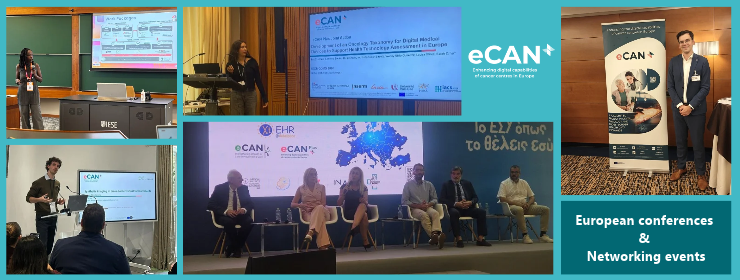
Since June 2026, eCAN Plus partners have taken part in several European conferences and networking events, connecting with different stakeholders working to improve cancer prevention and care. From Barcelona and Paris to Brussels, Thessaloniki, Rome and Freiburg, these scenarios have provided opportunities to share the Joint Action’s progress, exchange expertise and strengthen links with initiatives pursuing similar goals.
Together, these activities reflect the interconnected aspects of digital transformation in oncology: putting digital health into practice, ensuring everyone can benefit from new technologies, improving access to and sharing of health data, and establishing reliable frameworks for evaluating digital medical devices and protecting sensitive information.
From digital innovation to better cancer care
The 31st European Health Management Conference (EHMC), held in Barcelona during summer, has provided an opportunity to present the progress made by eCAN Plus’ first year. Chloë Mbarushimana, from Sciensano (WP1), introduced the Joint Action and highlighted its contribution to addressing the cancer burden across Europe.
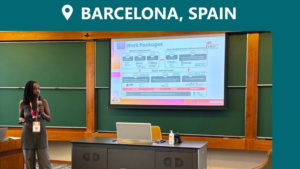
Chloë Mbarushimana presenting the JA in Barcelona
Through its work on digital health and telemedicine, eCAN Plus aims to strengthen the digital capabilities of cancer centres and support more interconnected healthcare systems. Achieving this goal, however, requires more than introducing new technologies: digital solutions must be implemented in ways that respond to the needs of patients and healthcare professionals.
This people-centred approach was also at the heart of Digital Health in Practice, an event organised by the 3rd Regional Health Authority of Macedonia. Greek partners from the Centre for Research & Technology Hellas (CERTH), the AUTH Medical Physics & Digital Innovation Lab and Papageorgiou General Hospital participated in discussions on telemedicine and digital health in cancer care, highlighting the contribution of eCAN and eCAN Plus to innovative, patient-centred oncology solutions.
The discussions also underlined the importance of digital health literacy and user engagement. Patients, caregivers and healthcare professionals need the knowledge, skills and support to use digital tools effectively. Ensuring that these solutions are accessible and beneficial therefore depends not only on technological development, but also on involving the people who will use them.
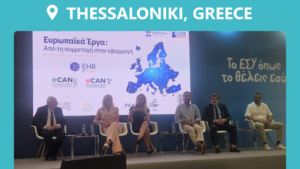
eCAN Plus Greek partners during their presentation
Connecting European initiatives and expertise
Making digital health work across Europe also requires collaboration between organisations, projects and healthcare systems. This was a central theme at 5 Years EU Cancer Mission: Stronger Through Connection, held in Brussels, where Robbe Saesen, from Sciensano, represented eCAN Plus in a panel discussion on improving access to and sharing of cancer data.
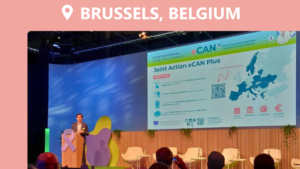
Robbe Saesen during his intervention in the 5 years of the EU Mission Cancer
The exchange brought together stakeholders from various fields to discuss how collaboration and the effective use of data can support the future of cancer prevention and care. For eCAN Plus, these discussions are closely linked to its ambition to strengthen digital capabilities and encourage cooperation between European initiatives working towards common cancer-related goals.
The same commitment to collaboration was reflected in the General Assembly Meeting of JANE-2, the EU Joint Action on Networks of Expertise on Cancer, held in Rome. Saesen presented eCAN Plus there too and shared the JA’s experience with professionals from across the cancer care community.
By engaging with these initiatives, the members of the project can exchange knowledge, identify opportunities for synergies and contribute to a more coordinated European approach to cancer care pathways.
Building trust through data governance and digital health assessment
As collaboration increasingly relies on the exchange of health information, data protection and responsible data use become essential. These issues were explored at the 4th European Health Data Protection Congress in Paris, where Pablo Suriol, from Sciensano, presented Synthetic Imaging in Cross-Border Virtual Tumour Boards: Uses and Limitations.
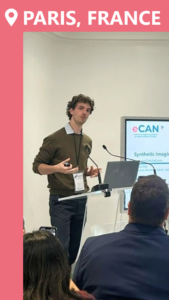
Pablo Suriol at the EHDPC
His presentation examined how synthetic medical imaging could support cross-border collaboration in cancer care, particularly through Virtual Tumour Boards (VTBs). It also addressed practical applications and challenges related to the General Data Protection Regulation (GDPR) and European Health Data Space (EHDS) requirements, including data anonymisation and the remaining risks of patient re-identification.
The discussion highlighted a key consideration for digital oncology: innovation and data sharing must go hand in hand with robust safeguards that protect patients and maintain trust in digital healthcare services.
Trustworthy digital health also depends on having appropriate methods to assess the technologies being introduced into clinical practice. This was the focus of the 47th Annual Conference of the International Society for Clinical Biostatistics (ISCB), held in Freiburg, Germany, where Loubna Cadi presented work developed by WP9 on the classification of Digital Medical Devices (DMDs) used in cancer care.
As these devices become increasingly integrated into healthcare, consistent approaches to their assessment are essential. The framework developed by WP9 aims to support Health Technology Assessment (HTA) agencies in evaluating digital medical devices more consistently, efficiently and transparently across Europe. It contributes to WP9’s broader objective of establishing a common European framework for describing, evaluating and reimbursing digital medical devices in cancer care.
Under the conference theme Big Data, Small Data, Your Data: Transitions in the Age of Biomedical AI, researchers working across biostatistics, epidemiology, medical informatics, bioinformatics and biomedical artificial intelligence explored how diverse health and biomedical data can be analysed and translated into meaningful research and healthcare applications. The discussions provided a wider scientific context for work aimed at ensuring that digital health technologies are assessed through reliable and consistent approaches.
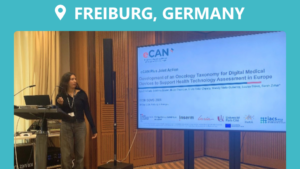
Loubna Cadi during her presentation at the ISCB Annual Conference
A shared effort to strengthen digital cancer care in Europe
Across these events, eCAN Plus partners have contributed to a broader European conversation about how digital innovation can translate into better cancer prevention and care. Their participation has connected several essential priorities: involving patients and healthcare professionals in digital transformation, fostering collaboration between European initiatives, facilitating the responsible use of health data, and supporting consistent assessment of digital medical devices.
As the Joint Action progresses, eCAN Plus will continue engaging with stakeholders and sharing expertise across Europe to strengthen the digital capabilities of cancer centres and support more accessible, secure and patient-centred cancer prevention and care.
eCAN Pulse: Sharing knowledge and expertise across the consortium
Alongside its participation in European conferences and networking events, our JA is strengthening collaboration within its own consortium through eCAN Pulse, a new monthly online initiative designed to showcase the work of its members, exchange scientific knowledge and foster learning across the project. In a large-scale Joint Action like ours, these sessions provide a dedicated space for researchers and professionals to present their work, share experiences and gain insights into the activities of other institutions and WPs.
The initiative was launched with a session led by Anastasia Farmaki, from the Centre for Research & Technology Hellas (CERTH), who shared insights from Work Package 8’s focus groups on user engagement in digital health. Her presentation highlighted the importance of involving patients, healthcare professionals and caregivers in the design of digital tools to ensure that solutions respond to their needs and expectations.
Discover more about eCAN Pulse in our one-pager and stay tuned for upcoming sessions!
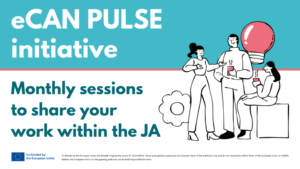
eCAN Pulse initiative created by WP1
Bluesky Discussion
View on BlueskyNo replies yet. Be the first to comment on Bluesky!