The designation of Health Data Access Bodies (HDABs) in each Member State is one of the key milestones that will unlock new opportunities
One year after the European Health Data Space (EHDS) came into force in March 26, 2025, the most ambitious model for health-data exchange in the EU is taking shape across Member States (MSs). This legislation establishes a common framework for the use, reuse and exchange of electronic health data across the European Union. It aims to make health information more accessible and useful across borders.
The EHDS will start to apply gradually covering both primary and secondary uses of health data. Primary use aims to give citizens seamless access to and control over their electronic health records across the EU. Secondary use enables the reuse of health data for purposes beyond care delivery, such as research and policymaking. Most provisions will apply from 2029, although some data categories, such as genomics, will only be accessible from 2031.
From the EU level down to national and regional authorities, stakeholders are working to ensure they are ready once the regulation begins to apply. In this context, the EHDS is also a cornerstone of the eCAN Plus Joint Action (JA). As a project that aims to enhance the digital capabilities of cancer centres, one of its main objectives is to bolster preparedness among participants for this framework’s implementation.
We have invited Dr. Irini Kessissoglou to discuss this new legal framework, including its challenges, opportunities, key milestones, and ongoing work. Dr. Kessissoglou is a Policy Officer in the Digital Health Unit at DG SANTE, where she focuses on the implementation of the EHDS for secondary use.
Interviewer: The EHDS is an ambitious model, what are its main opportunities and challenges?
Dr. Kessissoglou: The European Health Data Space is not just a model; it is much bigger. In the case of secondary use, it serves as the legal framework for the reuse of electronic health data for different purposes, such as research, innovation and policymaking. With this legislation, we are trying to harmonise the way that researchers find and access electronic health data across borders.
One of its key opportunities is to unlock and significantly increase the use of electronic health data that is available across borders, which is currently underexploited. That will lead to better research, innovation, AI in health, evidence-based policymaking and public health solutions.
However, there are also challenges. By March 2029 all MSs and the Commission must be ready to apply it. The timing, the funding and the fact that MSs start from an uneven level of development are key challenges. Some MSs have already developed technical infrastructure and are already providing access to data. Others still have to build everything from scratch. Engaging the right data holders and ensuring that they are prepared for the application of the regulation also presents difficulties. At political level, decision-makers need to understand well the EHDS when it comes to designating Health Data Access Bodies (HDABs) and other entities at national level, such as Health Data Intermediation Entities and Trusted Health Data Holders.
What is the role of these Health Data Access Bodies?
The HealthData@EU infrastructure is composed of the central platform with the central services provided by the Commission, such as the EU datasets catalogue (metadata catalogue) and the one place where data applicants can apply to access multiple datasets. By March 2027 every MS has to designate a Health Data Access Body (HDAB) which will act as the national HDAB coordinator, connecting with the central platform. There can also be regional HDABs, but one single national contact point must be assigned. HDABs are key players because they have to host the national datasets catalogue (metadata catalogue) and analyse the data access application forms that MSs will receive. Health data will most often be staying within the country and the users will be accessing it inside a secure processing environment provided by the HDAB.
You have already mentioned that Member States are not equally prepared for the adoption of the EHDS. What are the main burdens for under-resourced healthcare systems and providers? How does the EHDS plan to address them?
There are MSs that are lacking human resources, technical infrastructure, coordination, and funding to develop the needed capabilities. The Commission is supporting all EU MSs through Direct Grants to set up their Health Data Access Bodies. We are in the second wave of these grants to develop, for example, their national metadata catalogue, their data access application management system or secure processing environment. Then, we also have the Community of Practice to make sure that all 27 MSs are building HDABs in a similar way. In this community of practice there are subgroups with experts from different countries that share knowledge, experiences and tools to build digital business capabilities. Those regular meetings help to align MSs towards an interoperable system that works across countries.
On top of this, we are also supporting MSs with central services and open-source tools to build those national datasets catalogues or the data access application management system. We have also a capacity-building project that develops trainings for the staff working in the HDABs, or the TEDHAS 2 Joint Action that is developing guidelines to manage different process in the EHDS for secondary use.
The EHDS entered into force in 2025 and is expecting to start applying in 2029. What work is currently underway, and what are the key milestones between now and 2029?
The Commission is working now full speed on the first implementing acts that must be adopted by March 2027. One of them is related to the EHDS Board, the architecture of the Health Data@EU Infrastructure, dataset descriptions, secure processing environment, etc. As for MSs, by March 2027 they will have to designate their national Health Data Access Bodies. This is a key milestone that will also unlock more possibilities to achieve the EHDS full implementation.
The TEHDAS Joint Action assessed the readiness of health data systems in 12 Member States to comply with EHDS provisions and found that none was fully prepared. Has the situation improved since that assessment?
Yes. Back then, the landscape was very heterogeneous. It has improved a lot lately. The Commission has developed a maturity model, based on a survey, to assess MSs’ readiness at several levels. It has shown that we are in a much better place because MSs are aware of the new legal framework and that they must implement it and have it operational by March 2029, something that was not the case in 2022. For example, most MSs are in the process of either adapting their already existing national laws on secondary use of health data or developing new ones to align them with several articles of the EHDS regulation. On a more technical level, we have observed that most MSs are in the planning or development phase of their HDABs. The most advanced ones have already operational systems: an operational national metadata catalogue, a secure processing environment for users or a data access application management system. We will see more and more MSs getting first in class.
Through your work with TEHDAS, you have engaged with various stakeholders, including researchers and policymakers. What are the main challenges they face when reusing health data for research or policymaking?
Researchers were describing that they are having difficulties in accessing data because there is no transparency in a cross-border context. They do not know how to get access to datasets, especially if they are from a different MSs. The process is also lengthy. It can take up to a year and a half to get access to data in some cases. For multi-country studies the key issue is the different interpretation of the General Data Protection Regulation (GDPR). With the EHDS these challenges will hopefully be alleviated, and research will be much faster and more streamlined.
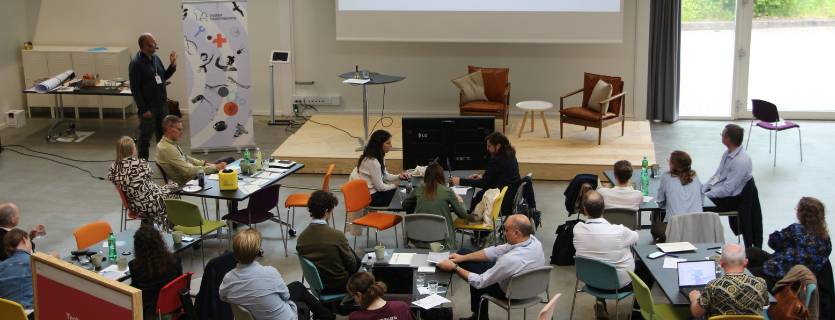
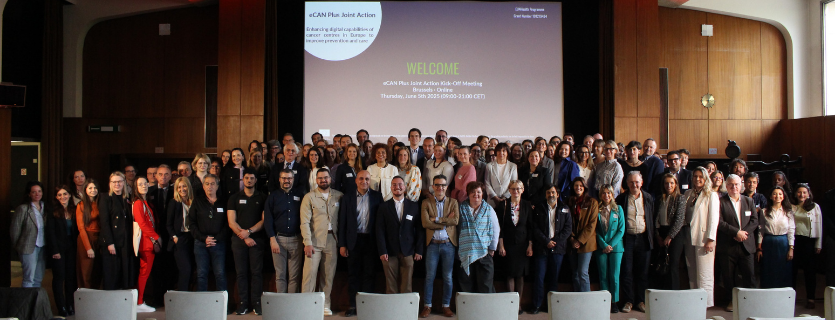
You attended the eCAN Plus Joint Action kick-off meeting. To what extent can this project contribute to the effective implementation of the EHDS?
I think the eCAN Plus project supports mostly the EHDS for primary use. It supports patients’ access to healthcare and to their oncology data in a structured way. But, if you are improving data quality at source, that also supports the secondary use of health data. Having high-quality data coming from primary use will boost better, easier and faster research.
If the EHDS is successfully implemented, how do you envision the European healthcare ecosystem in ten years?
In 10 years, the ecosystem will look very different in several areas. Primary use is the area where we will see a significant change. Through the MyHealth@EU or other applications developed by each MS, we will be able to access our health data, control who has access to it, or go to pharmacies when we are traveling abroad and be able to get our prescriptions. We will see the EHDS in action. It will be more in our daily life, and every European citizen will be aware of it and its benefits.
As for secondary use, we will have a fully operational HealthData@EU infrastructure. It will act as a “one-stop shop” where you would find high-quality metadata records to apply for datasets and be able to do multi-country studies in an easier and streamlined manner. We will also see the first studies of this kind coming out. For example, in the case of rare diseases, where you do not have many cases at national level, researchers will be able to find better sample sizes. We also hope that the EHDS will be used to develop and train AI models and test AI tools, this is where we will see a big rise of European digital health industry. Last but not least, the evidence-based and data-driven policymaking will also improve. If in ten years we have another health crisis like COVID-19, I really hope that we will be able to act faster and in a much more data-driven way. It would be very valuable to showcase that what we are building now is helping citizens.


 eCAN
eCAN