Experts from across Europe convene in Denmark to advance Virtual Tumour Boards and Digital Transitions
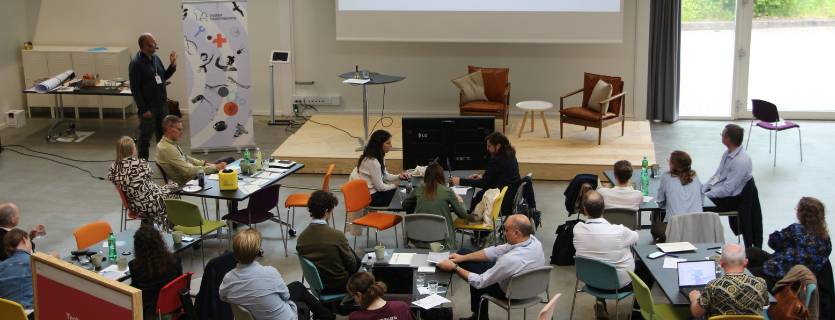
Almost 40 clinical and technical experts from across Europe gathered from June 17 to June 18 for the eCAN Plus workshop on ‘Barriers & Facilitators of Virtual Tumor Boards (VTBs) and Digital Transitions (DTs) in Europe’. The event was hosted by the Health Innovation Centre of Southern Denmark, and co-organised by the eHealth Laboratory of Cyprus University of Technology in Odense (Denmark). Both institutions are participating in Work Package 6, which focuses on collaborative clinical decision-making in diagnostics, treatment, and care across Cancer Centres (CCs).
Prior to the workshop, WP6 partners mapped 25 EU Cancer Centre sites to identify existing national guidelines addressing format, roles, and responsibilities for digital collaboration, as well as frameworks for health data exchange across CCs. This work also included a review of the European Health Data Space (EHDS) regulations. The primary objective of the workshop was to engage the experts in assessing the mapping results and defining the relevant clinical data required to support WP6’s two use cases. The greater aim is to achieve more sustainable, secure, interoperable, and trackable VTB and DT strategies.
These uses cases will allow WP6 to evaluate digital capabilities for health data exchange and virtual collaboration, one of them will be focused on the use of cross-European Virtual Tumor Boards, including Virtual Molecular Tumor Boards. The second one will address digitally facilitated patient transitions, including the use of Discharge Conferences.
According to WP6 partners, the experts participation is not only valuable to support the implementation of the two use cases, but also because it provides valuable realistic insights based on real-world workflows and their critical feedback will be formally considered to form final recommendations for an effective collaborative digital framework in cancer.
Participating healthcare professionals and technical experts have reported “very positive impressions”. Clinicians from Denmark and Norway are highly experienced in Virtual Tumor Boards and Digital Transitions, and they actively exchanged experiences and ideas on how to improve these online processes and facilitate digital collaborations, in national and cross-border settings, while prioritizing patients’ needs.
The two-day agenda featured interactive sessions, a live VTB simulation with active participant roles, and specialised presentations on digital transitions. Keynote speeches bridged the gap between clinical needs and technical execution, emphasizing compliance with the EHDS and integration with the European Electronic Health Record Exchange Format (EHRxF). Fernanda Fortunato, medical geneticist and member of the European Reference Network (Euro-NMD), presented CPMS 2.0, an European Commission platform designed to streamline cross-border collaboration for clinicians. Experts’ feedback during the event and their oncoming input, via a follow-up online meeting, will provide meaningful input to consolidate new recommendations for the advancement of VTBs and DTs in the EU.
Participants’ profile
The workshop drew strong interest during the recruitment phase, with 29 clinical and technical experts applying to participate. Ultimately, 24 experts attended the sessions in person, while 14 joined the online sessions. All of them represent a diverse geographical footprint that included Belgium, Cyprus, Denmark, Germany, Greece, Hungary, Norway, Poland, Portugal, Sweden, and Slovenia.
Their background was also diverse. Although most of them have over 10 years of professional experience and have already participated in EU projects related to digital health or cancer, they hold very different roles within hospitals, research centres or universities. From PhD researchers to heads of department, oncologists, nurses and IT experts. Healthcare professionals with extensive backgrounds in running VTBs and managing patient transitions spearheaded discussions, ensuring that the resulting recommendations are both accurate and actionable.
As the EU Digital Health Ecosystem continues to evolve, the contribution of these clinical oncology experts remains vital to advancing cross-border cancer care, and fostering unprecedented research collaboration across Europe.